


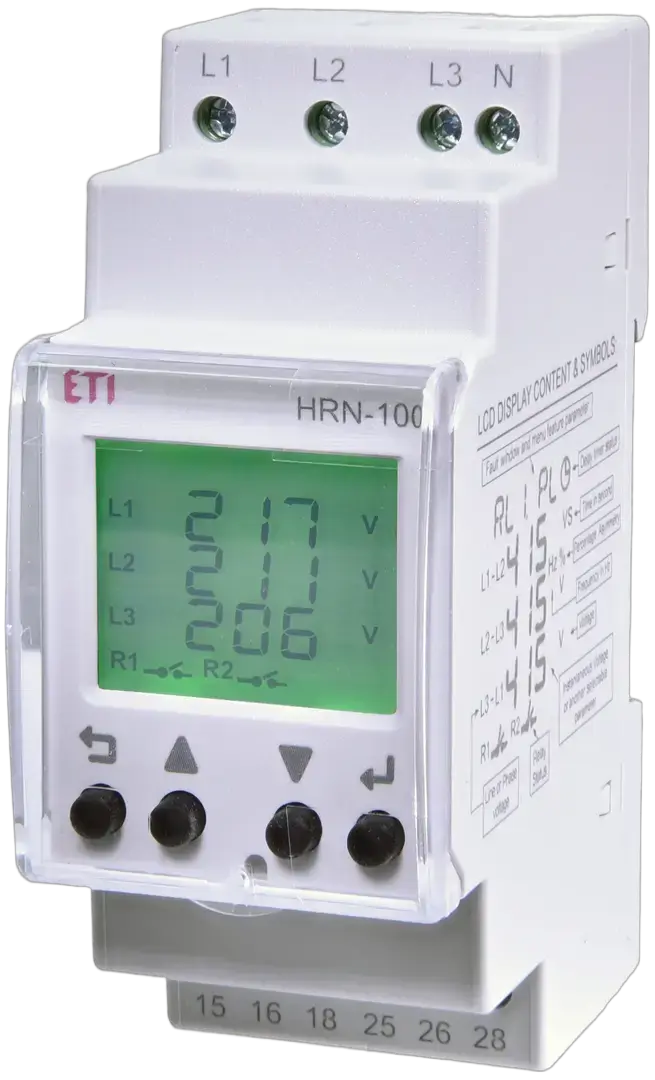

EFI-4 F 40/0.03 Întrerupător diferențial
- Cod ETI:
- 002062529
- Curentul rezidual de operare :
- 30 A
- Aplicație:
- IEC/EN 61008-1
- Curent de defect nominal:
- 0,03 A
- Tip:
- F
- Curent nominal:
- 40 A
- Adâncime:
- 70 mm
- Tip montaj:
- TH 35
- Număr de poli:
- 4
- Curent nominal de scurtcircuit Inc:
- 10 kA
- Timp de declansare :
- Cu întârziere scurtă
- Tensiune nominală AC:
- 400 V
- Secțiune transversală nominală:
- 1-25 mm²
- Standarde:
- IEC/EN 61008-1
- Grad de protecție IP:
- IP20
6 Documente
21 Logistică
Produs
- Net depth
- 73,5 mm
- Greutate
- 0,316 kg
- Net width
- 70 mm
- Net height
- 85 mm
- Stock unit of measure
- pcs
Ambalare de bază
- EAN code for a basic packaging
- 3838895879565
- Basic packaging weight
- 0,316 kg
- Basic Packaging Dimensions Depth
- 85,5 mm
- Basic Packaging Dimensions Height
- 73 mm
- Basic packaging volume
- 0,453 dm³
- Basic Packaging Dimensions Width
- 72,5 mm
- Basic packaging quantity
- 1 pcs
Ambalare transport
- Transport packaging weight
- 16,23 kg
- Transport packaging volume
- 25,691 dm³
- Transport packaging quantity
- 50 pcs
- Customs tariff
- 85362010
- Transport Packaging Dimensions Height
- 155 mm
- Transport Packaging Dimensions Width
- 375 mm
- Transport Packaging Dimensions Depth
- 442 mm
- EAN code for a transport packaging
- 3838895879572
- Pallet quantity
- 1.900 pcs
21 ETIM
- Rated insulation voltage Ui
- 400 V
- Built-in depth
- 70 mm
- Leakage current type
- F
- Connectable conductor cross section solid-core(Max)
- 25 mm²
- Surge current capacity
- 0,25 kA
- Connectable conductor cross section multi-wired(Max)
- 25 mm²
- Rated impulse withstand voltage Uimp
- 4 kV
- Degree of protection (IP)
- IP20
- Ambient temperature during operating(Min)
- -25 °C
- Mounting method
- DIN rail
- Rated fault current
- 0,03 A
- Connectable conductor cross section solid-core(Min)
- 1 mm²
- Pollution degree
- 2
- Frequency
- 50 Hz
- Number of poles
- 4
- Short-circuit breaking capacity (Icw)
- 10 kA
- Connectable conductor cross section multi-wired(Min)
- 1 mm²
- Rated voltage
- 400 V
- Rated current
- 40 A
- Ambient temperature during operating(Max)
- 40 °C
- Width in number of modular spacings
- 4
0 Software și drivere
26 Etichete
Produse similare 296 Toate produsele
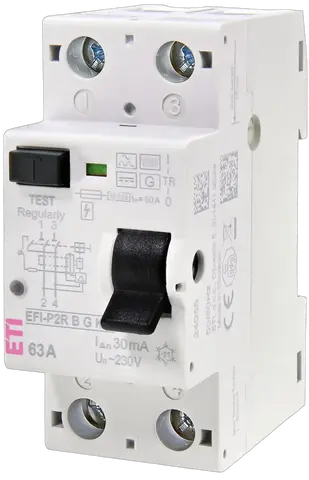
EFI-P2R B G/KV 25/0.03
- Nume clasă
- Întrerupător diferențial
- Curent de defect nominal
- 0,03 A
- Tip
- B
- Curent nominal
- 25 A
- Adâncime
- 70 mm
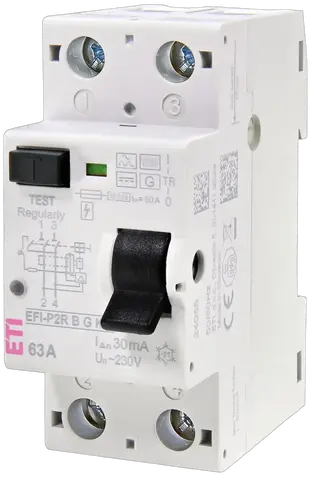
EFI-P2R B G/KV 40/0.03
- Nume clasă
- Întrerupător diferențial
- Curent de defect nominal
- 0,03 A
- Tip
- B
- Curent nominal
- 40 A
- Adâncime
- 70 mm
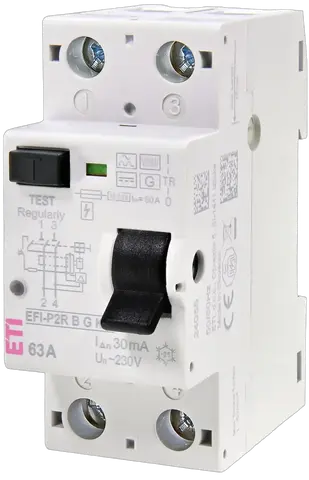
EFI-P2R B G/KV 63/0.03
- Nume clasă
- Întrerupător diferențial
- Curent de defect nominal
- 0,03 A
- Tip
- B
- Curent nominal
- 63 A
- Adâncime
- 70 mm

EFI-P2R B G/KV 80/0.03
- Nume clasă
- Întrerupător diferențial
- Curent de defect nominal
- 0,03 A
- Tip
- B
- Curent nominal
- 80 A
- Adâncime
- 70 mm
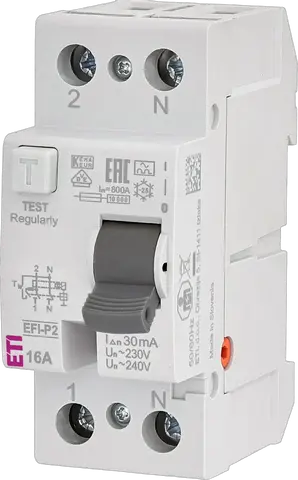
EFI-P2 A 16/0.03
- Nume clasă
- Întrerupător diferențial
- Curent de defect nominal
- 0,03 A
- Tip
- A
- Curent nominal
- 16 A
- Adâncime
- 68 mm
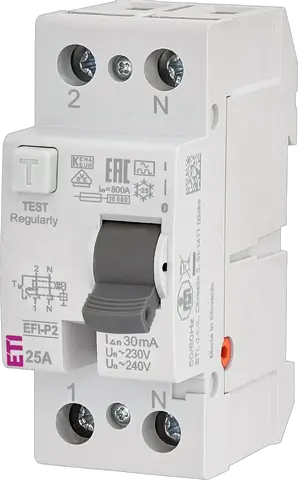
EFI-P2 A 25/0.03
- Nume clasă
- Întrerupător diferențial
- Curent de defect nominal
- 0,03 A
- Tip
- A
- Curent nominal
- 25 A
- Adâncime
- 68 mm
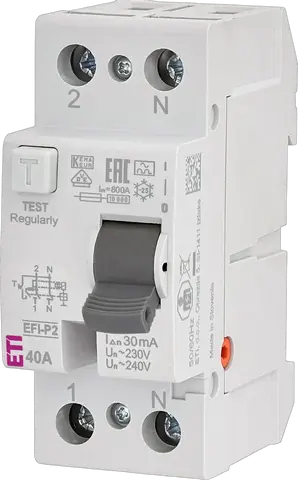
EFI-P2 A 40/0.03
- Nume clasă
- Întrerupător diferențial
- Curent de defect nominal
- 0,03 A
- Tip
- A
- Curent nominal
- 40 A
- Adâncime
- 68 mm
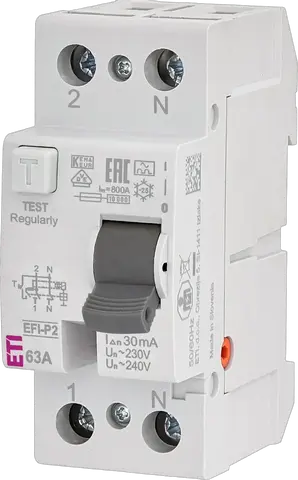
EFI-P2 A 63/0.03
- Nume clasă
- Întrerupător diferențial
- Curent de defect nominal
- 0,03 A
- Tip
- A
- Curent nominal
- 63 A
- Adâncime
- 68 mm
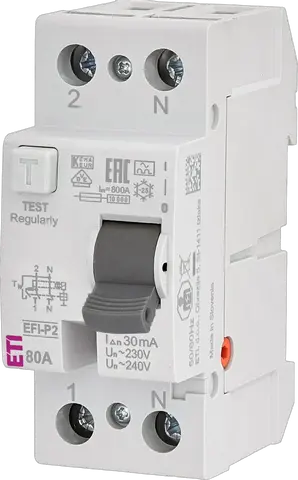
EFI-P2 A 80/0.03
- Nume clasă
- Întrerupător diferențial
- Curent de defect nominal
- 0,03 A
- Tip
- A
- Curent nominal
- 80 A
- Adâncime
- 68 mm
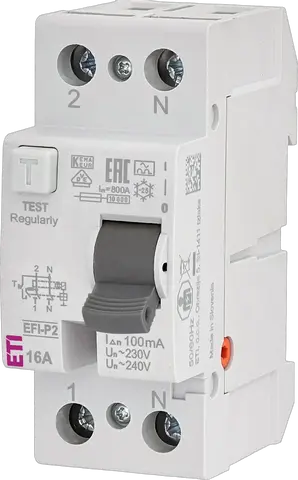
EFI-P2 A 16/0.1
- Nume clasă
- Întrerupător diferențial
- Curent de defect nominal
- 0,1 A
- Tip
- A
- Curent nominal
- 16 A
- Adâncime
- 68 mm

EFI-P2 A 25/0.1
- Nume clasă
- Întrerupător diferențial
- Curent de defect nominal
- 0,1 A
- Tip
- A
- Curent nominal
- 25 A
- Adâncime
- 68 mm

EFI-P2 A 40/0.1
- Nume clasă
- Întrerupător diferențial
- Curent de defect nominal
- 0,1 A
- Tip
- A
- Curent nominal
- 40 A
- Adâncime
- 68 mm
Produse recente 8 Trimite prin email





Știri și actualizări conexe
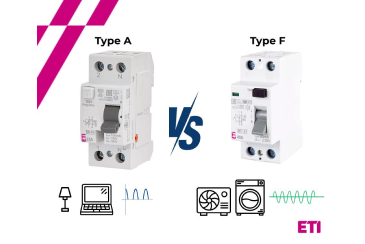
When Should You Use an F-Type RCCB Instead of an A-Type?
In recent years, the question “When should I use a Type F residual current circuit breaker (RCCB) instead of a Type A?” has become increasingly relevant. As electrical installations become more complex, incorporating frequency-controlled drives, modern appliances, and sensitive electronics, the line between appropriate and insufficient protection can be blurred.
This post aims to demystify the decision-making process between Type A and Type F RCCBs by exploring their capabilities, limitations, and ideal application environments. Whether you're designing a residential, commercial, or light-industrial installation, understanding when to step up from Type A to Type F could mean the difference between safe, stable operation and frustrating, or even hazardous, outcomes.
Kdaj uporabiti F-tip RCD namesto A-tipa?
V zadnjih letih je vprašanje »Kdaj naj uporabim F-tip zaščitno stikalo na diferenčni tok (RCCB) namesto A-tipa?« postalo vse bolj aktualno. Električne inštalacije so vse bolj kompleksne, saj vključujejo frekvenčno krmiljene pogone, sodobne naprave in občutljivo elektroniko, zato je meja med ustrezno in nezadostno zaščito pogosto nejasna.
Ta prispevek želi razjasniti odločitev med A- in F-tipom RCCB z raziskovanjem njunih zmogljivosti, omejitev in idealnih področij uporabe. Ne glede na to, ali načrtujete stanovanjsko, poslovno ali lahko industrijsko inštalacijo, je razumevanje, kdaj preiti z A-tipa na F-tip, lahko odločilno za varno in stabilno delovanje ter preprečevanje neželenih ali celo nevarnih posledic.

EFI-2 & EFI-4 Type F RCCBs
ETI introduces the EFI-2 and EFI-4 Type F residual current circuit breakers, designed for reliable protection in modern single-phase installations that include appliances with frequency inverters. Type F technology ensures safe operation even in the presence of mixed-frequency residual currents—a growing requirement in today’s households and small commercial environments.